
What do AFS 2023:10 and ISO 7010 mean in relation to signage and labelling?
AFS 2023:10 and ISO 7010 are two different standards for safety signs used to communicate risks, requirements and safety information. Both standards contain symbols, known as pictograms, which are designed to be easy to interpret and understand, regardless of the language spoken.
In this information article, we will examine the implications of AFS 2023:10 and ISO 7010, their similarities and the relevant regulations in Sweden.
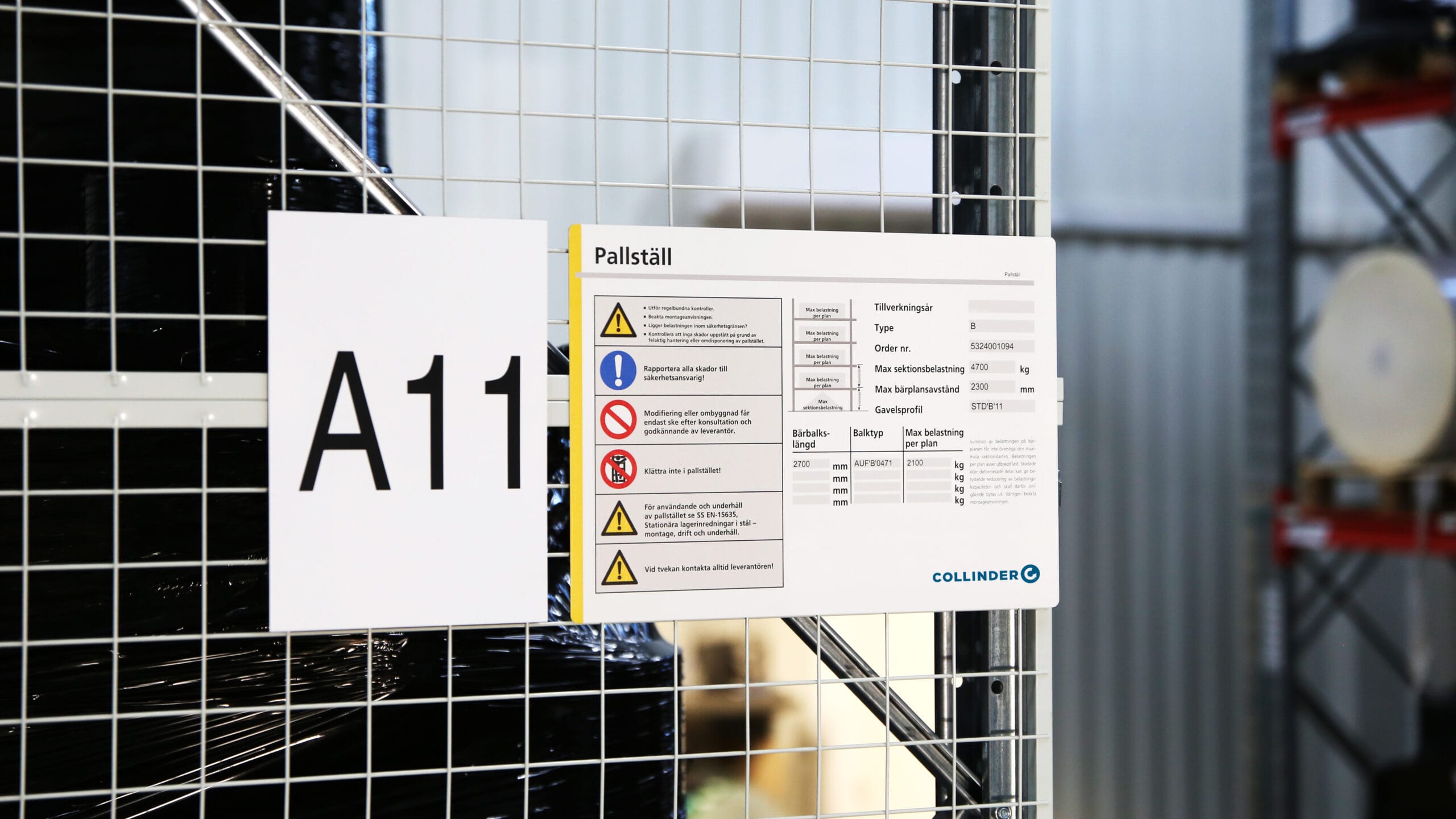
What does AFS 2023:10 mean?
AFS 2023:10 is a legally binding regulation issued by the Swedish Work Environment Authority, which aims to prevent ill health and accidents in the workplace.
The standard divides signs into five main categories:
Colours and shapes are also standardised:
- Red = prohibition and fire
- Yellow = warning
- Blue = mandatory
- Green = safety and evacuation
The symbols have been designed in accordance with established design principles and have been tested to ensure they are understandable to the vast majority of people from different cultures and who speak different languages.
As regards signage and labelling, the regulation means in practice that:
- Risks should, as a matter of priority, be eliminated; however, if this is not possible, they must be clearly indicated by means of signs or markings
- Sources of chemical hazards, such as pipes, containers and areas, must be labelled so that their contents and the associated risks are clearly indicated
- Signage and labelling form part of systematic health and safety work and are intended to help prevent accidents
This means that the employer is responsible for ensuring that the correct information is in place and that it is clear and easy to understand.
What does ISO 7010 mean?
ISO 7010 is an international system that defines how safety signs should be designed using standardised symbols, colours and shapes. Each sign category has a clear visual identity, enabling the message to be interpreted quickly without the need for additional text. By using a common system of symbols in public buildings, workplaces and industrial settings, it becomes easy to understand the rules, which can reduce misunderstandings and accidents.
ISO 7010 and AFS 2023:10 are based on the same system, and both standards use the same five categories of signs and the same colour scheme.
Similarities and differences between AFS 2023:10 and ISO 7010
Both AFS 2023:10 and ISO 7010 are based on a common system of standardised symbols that clearly communicate the prohibitions, requirements and hazards present in the environment where the signage is located. The two different systems are structured in the same way, but there are certain historical differences between older Swedish AFS symbols and symbols in accordance with SS-EN ISO 7010.
What are the rules in Sweden?
In Sweden, safety signage is primarily regulated by the Swedish Work Environment Authority’s regulations AFS 2023:12 on the design of workplaces, whilst AFS 2023:10 sets out requirements for signage relating to certain specific risks. The Swedish Work Environment Authority also accepts symbols in accordance with SS-EN ISO 7010, which has become the industry standard in many sectors.
Signs and stickers compliant with AFS and ISO standards at Collinder
At Collinder, we manufacture both signs and stickers for industry, public spaces and construction sites at our own production facility in Lomma. You can order signs and stickers from us that comply with both AFS and ISO standards, as well as other standards should the need arise. Our signage and labelling can be customised to suit your needs, and we manufacture products for all environments. For example, if you need to communicate multiple hazards in the same location, we can produce combination decals or combination signs with several hazard pictograms integrated onto the same sign or decal.
Would you like to find out more about what we offer? Please contact us at info@collinder.se
